

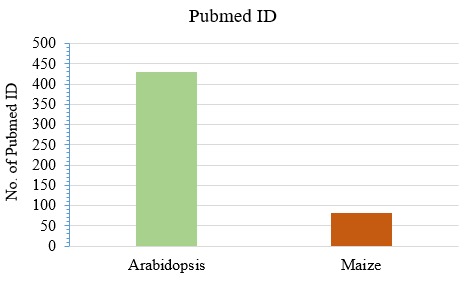
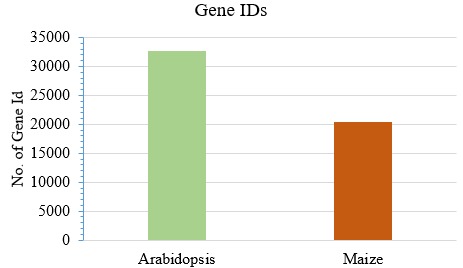
This image represents our research on plant stress responses.
Land plants are frequently exposed to a variety of undesirable or even adverse environmental conditions due to their sessile nature. These abiotic and biotic stresses affect plant development, growth, and reproduction, posing a significant threat to plant survival. Further, the catastrophic forecast of global warming is expected to increase the frequency, intensity, and duration of these adverse environmental conditions. Thus, the development of stress-tolerant cultivars with higher yields is at the top of the priority list for meeting future food and nutritional needs. Thus, at this juncture, the comprehensive knowledge of the gene and their regulatory elements underlying stress tolerance would be the initial step towards developing stress-tolerant crops. Several databases contain information on stress-responsive genes in plants. Most of these databases lack one or more pieces of information, viz., validated stress-responsive genes along with their regulatory elements, gene sequences (CDS/Protein), orthology, and structure. There are studies that have reported exploring transcriptional or post-transcriptional regulatory interactions; however, an integrated perspective of the regulatory elements is lacking. Thus, the PlantESdb database presents a highly curated, authentic database that contains comprehensive, high-quality resources for the individual, as well as combined stress-responsive genes (ESR genes) and their transcriptional and post-transcriptional regulatory elements in the model plant Arabidopsis thaliana and one of the major cereals, maize (Zea mays L.), with an effective knowledge-based information retrieval system.